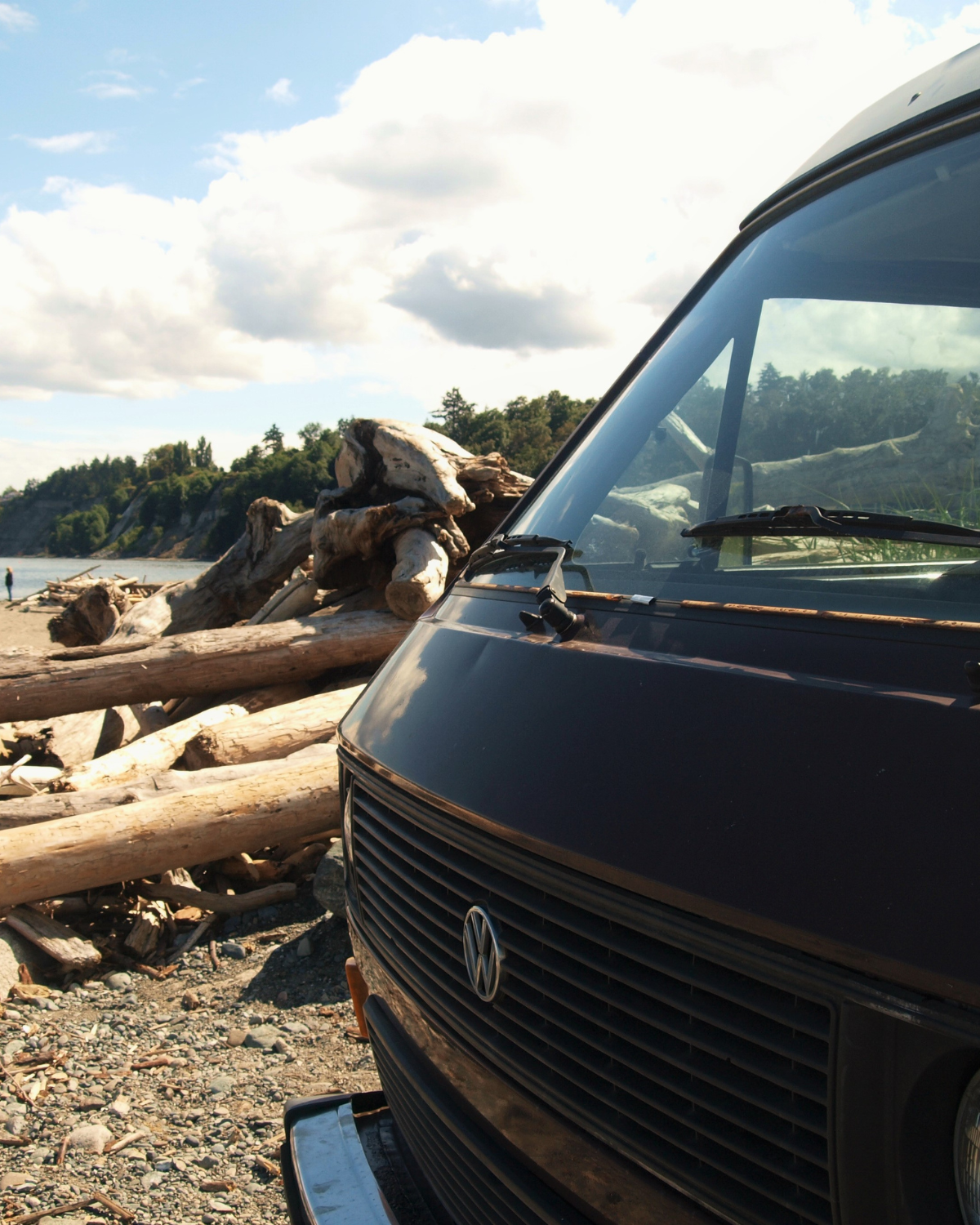
I TOOK THE LONG WAY ON PURPOSE. HERE’S WHY.
The Highway Feels Longer in a Westy
Driving the modern Island Highway in a Westy can feel like a long haul.
The speed limit says one thing, but an old van has its own idea of a comfortable pace. At 80 or 90 kilometres an hour, the engine is humming, newer vehicles are moving past, and those long straight sections seem to stretch out ahead of you.
You are getting somewhere. You do not always feel like you are travelling.
We were heading home from Campbell River on a hot midsummer day. There was no deadline waiting for us. No ferry to catch. No reason to squeeze another ten minutes out of the drive.
So when we saw the “Sea Side Route” turn-off sign for the old Island Highway, we took it.
The speed dropped. The road narrowed. Trees started throwing patches of shade across the windshield. Then the forest opened, and the water appeared beside us.
Almost right at the edge of the road.
The Westy settled in.
Old vans are suited for old roads.
At 60 or 80 kilometres an hour, I was no longer trying to keep up. I was cruising.
The Road Started Feeling Like Part of the Day
The difference was immediate.
On the main highway, I tend to watch the road ahead and count the distance left. On the old highway, I started watching everything else.
A marina tucked into a bay. An old house with weathered siding and a newer home built beside it with that coastal BC architecture. Small boats tied to docks. People carrying towels down toward the water. Driveways disappearing into cedar trees.
The road would run right beside the ocean for a while, then curve inland and dip back into the forest. A few minutes later, the water would show up again.
The windows were open, and the breeze coming off the coast cut through the heat inside the van. That alone made the route worth it. A Westy warms up quickly on a sunny summer day, especially when the engine has been working for a few hours.
Out beside the water, the air changed.
The van felt cooler. The road felt easier. Even the engine seemed happier at that pace.
Maybe that last part was just me.
Taking it Bay by Bay
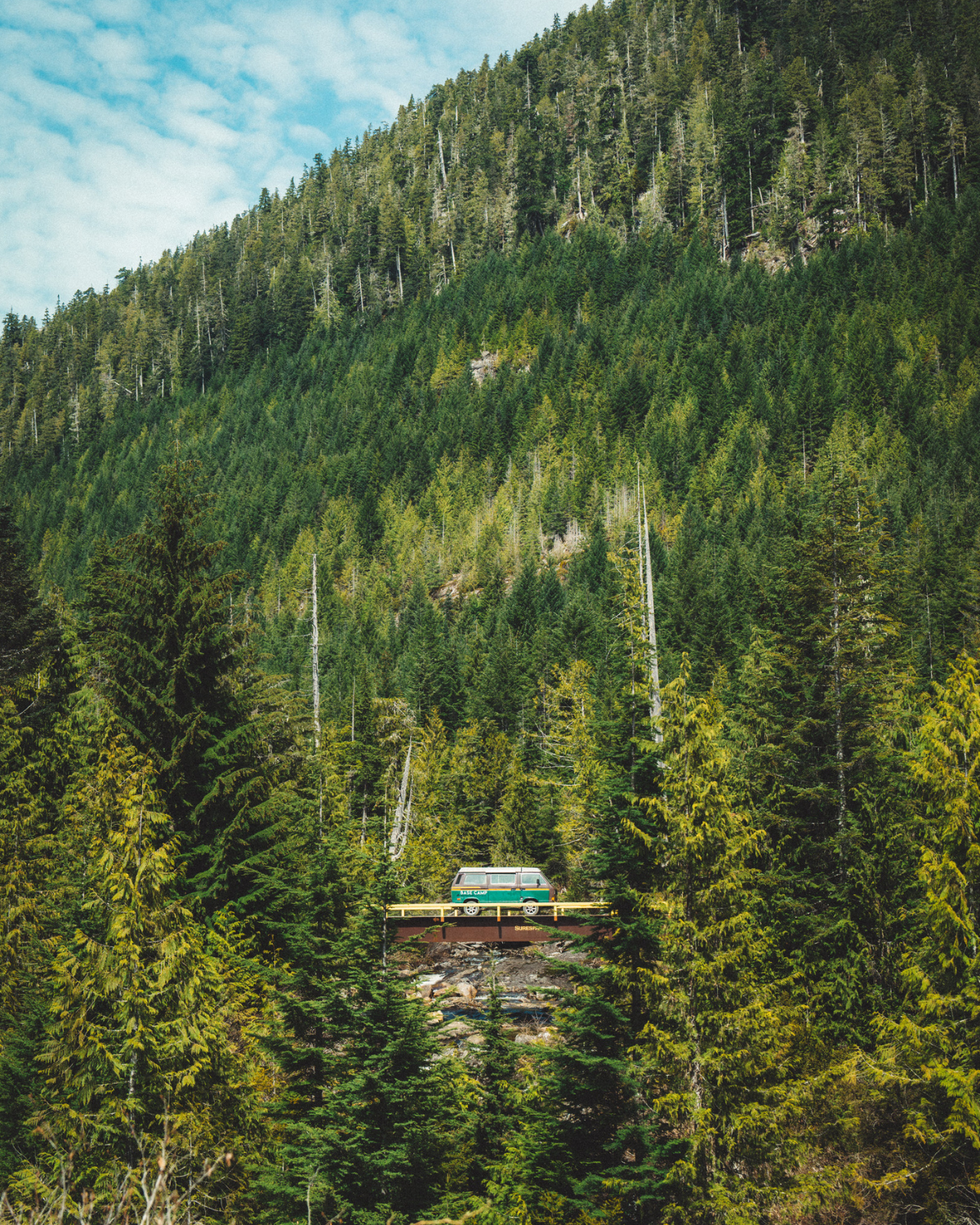
The section between Courtenay and Qualicum Beach has a rhythm of its own.
It feels like one bay leads into another. The names change, but the pattern keeps going: water, forest, a small community, then water again.
There are stretches where the ocean is close enough that you can glance across the passenger seat and see it through the open window. Then the road bends away, slips between tall trees, and passes homes that look like they have been there for generations.
Some are small and weathered. Some have additions that were probably built one room at a time. Others are new, with big windows aimed toward the water.
I like seeing that mix.
It reminds me that these are not just scenic places on a route map. People live here. They fish here. They walk down to the shoreline in the morning and know what the tide is doing without checking an app.
The villages have their own pace too. You pass local shops, marinas, small restaurants, old signs, garden fences and roadside farm stands. Nothing arrives all at once. The road gives it to you slowly.
That is the whole vibe of this stretch.
You are still moving, but the drive stops feeling like dead time between two places.
The Kind of Stop You Do Not Plan
Parksville is one of those places where it is easy to say, “We’ll just stop for a few minutes.”
Then you see the beach.
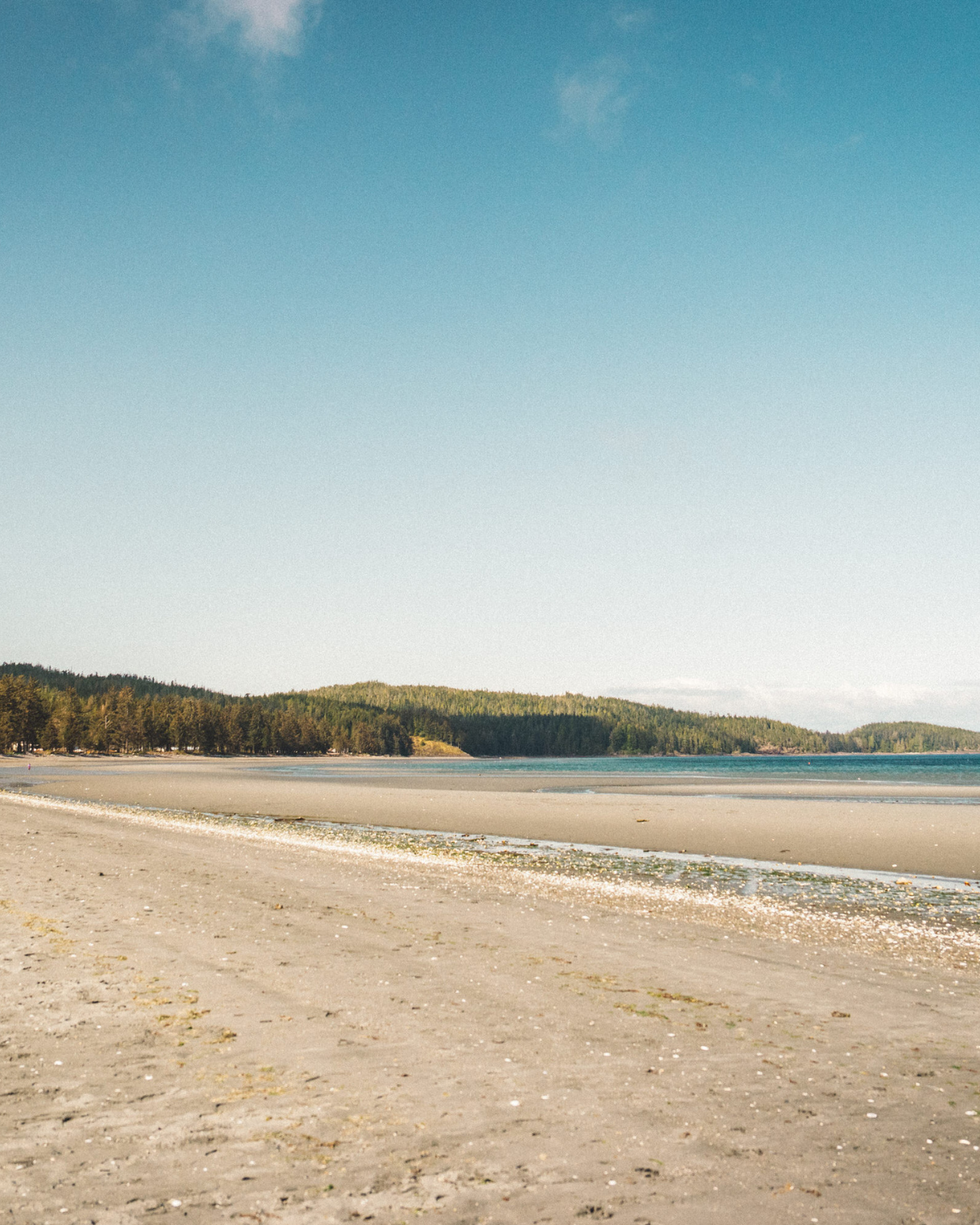
At low tide, the sand seems to keep going. You can walk out toward the water for what feels like hundreds of feet and still only be waist-deep.
That makes it hard not to slow down.
Shoes come off. The water is warmer than expected. Before long, we are looking for sand dollars, shells, and whatever else the tide has left behind.
It is not a major expedition. There is no gear list. No trail map.
It is just a stop that became part of the day because we had left enough room for it.
That is what the main highway tends to remove. It makes the plan feel fixed. You get on, hold your speed, and get off near the destination.
The old road keeps making suggestions.
Turn here. Pull over. Walk down to the water. Stay another ten minutes.
The Southern Roads Feel the Same
Closer to home, the coastal roads through Crofton, Maple Bay, and Cowichan Bay carry that same feeling.
Crofton has a ferry coming and going from Salt Spring Island. Vehicles line up, people wait near the terminal, and the whole town feels connected to somewhere just across the water.
Maple Bay pulls the road back toward the coast. The forest grows close around it, then opens into glimpses of the marinas and waterside seafood restaurants.
Cowichan Bay has more movement. Boats, shops, and docks full of sealions and a working waterfront all pressed into a narrow strip beside the water.
Between these places, the road moves through farm fields and forest. You pass vineyards and small farms, reminders of how much food and drink on the Island is produced close to where it is enjoyed.
That local connection is easier to understand when you drive through it.
You see the fields. You see the roadside stands. You see, the distance between the farm and the village is sometimes only a few kilometres.
On the main highway, much of that disappears behind barriers, exits, and trees.
On the coastal roads, it is right outside the window.
When I Would Still Take the Fast Road
I am not against the modern highway.
When I have somewhere to be, it does its job. If I am catching a ferry, meeting someone at a certain time, or trying to cover a lot of the island in one day, I will take the faster route.
But holiday weekends can get crowded. Traffic bunches up. Everyone seems to be trying to arrive at the same time.
In a Westy, that can make the drive feel even longer. You are holding your pace while faster vehicles work their way around you, and the engine noise starts to become the main soundtrack.
The old highway changes the expectation.
The speed fits the van. The curves keep the drive interesting. Towns and bays break the route into smaller pieces.
You are not falling behind.
You are exactly where you meant to be.
How I Would Drive It Again
For this route, I would leave with most of the day ahead of me.
I would stay on Highway 19A through the Comox Valley and continue south along the water. I would leave room for a beach stop, lunch on the marina, or a roadside stand that looks worth pulling into.
A few things make the drive better:
Start with enough time that the slower route does not feel like a compromise.
Keep the windows open when the coastal breeze picks up.
Stop before you feel rushed to stop.
Watch for cyclists, pedestrians, and local traffic through the smaller communities.
Fill the tank before committing to a long wandering day. Old vans like slow roads, but they still like fuel.
Mostly, I would resist turning the route into a checklist.
The villages are worth seeing, but the real point is what happens between them.
The bends in the road. The patches of shade. The first glimpse of water after a stretch through the trees.
Old Roads, Old Vans
A Westy is not built to make Vancouver Island disappear beneath the tires.
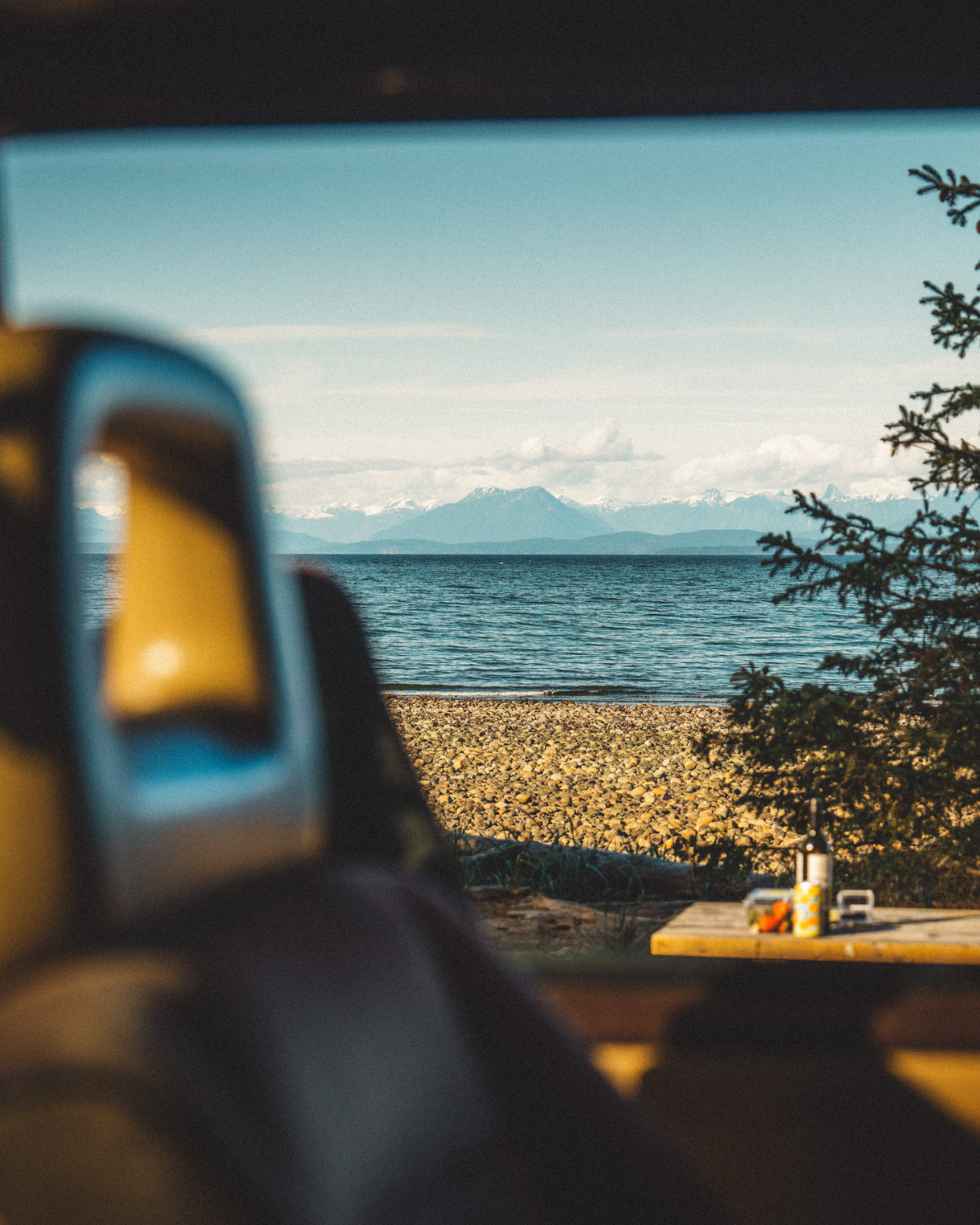
It is a small cabin on wheels, moving at a pace where you can still smell the ocean through an open window and notice a weathered boat tied up in a quiet bay.
That is why Base Camp trips work best with a little room in the plan. The vans are set up for the stops as much as the drive. You can pull over, make lunch, walk on the beach, and keep moving when you are ready.
The modern highway may get me home sooner.
But on that hot summer day, the old road gave me more of the Island.
That was the whole point.
If this kind of slow, local touring is calling your name, our Westys are ready when you are.