
THE REALITY OF PEAK SEASON: HOW TO ENJOY IT ANYWAY
The Buzz
There is a certain moment in peak season when you know you are getting close to Tofino.
The traffic slows down. Surfboards start appearing on roof racks. RVs and camper vans are packed to the windows with coolers, wetsuits, camp chairs, beach blankets, and people who look like they have already accepted that everything is going to take a little longer than planned.
By the time you roll into town, the whole place feels awake.
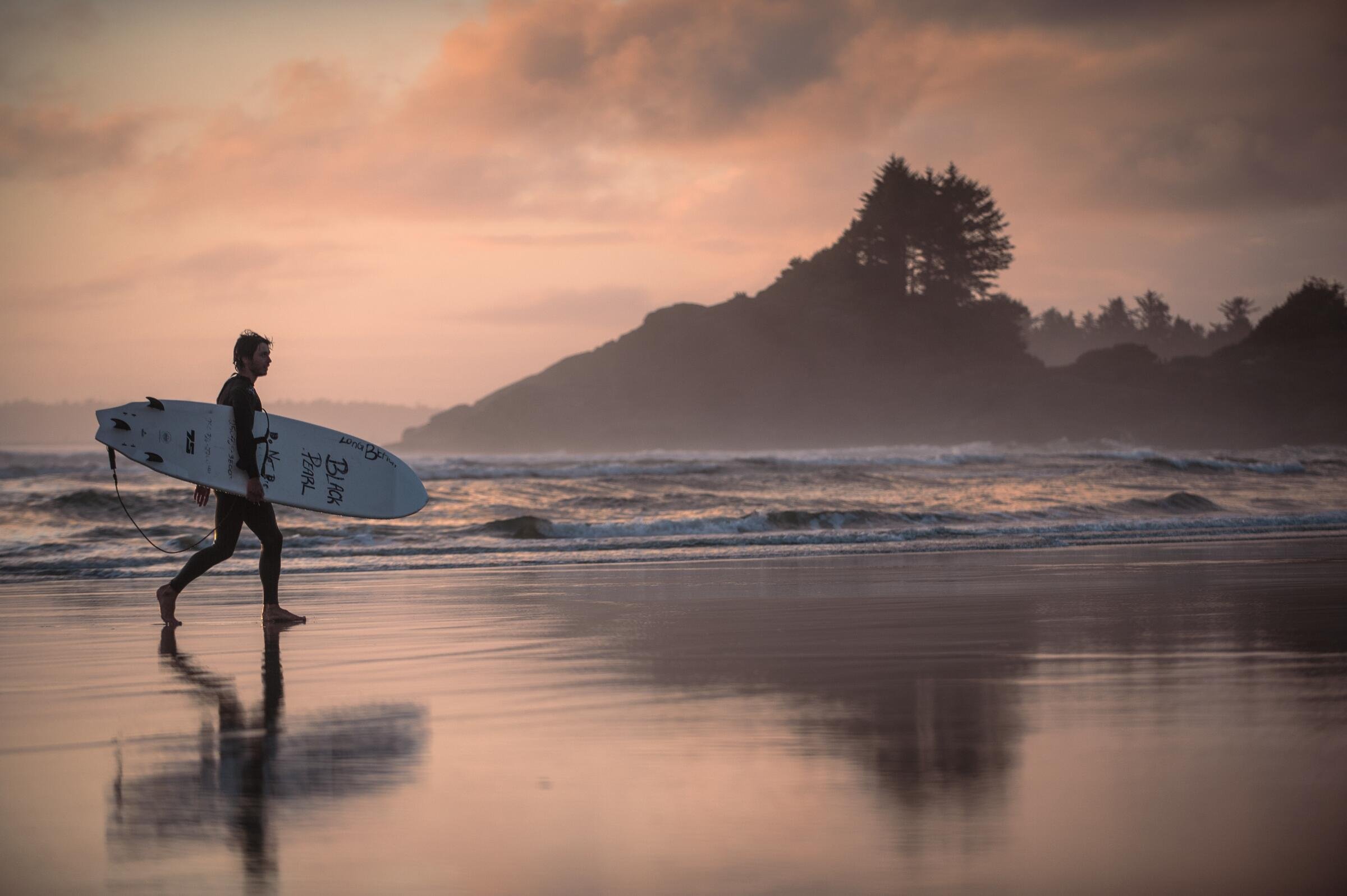
The beaches are full of wetsuits. The parking lots are full of sandy feet and half-open tailgates. Someone is always carrying a board, shaking out a towel, or trying to remember which beach access they came in from.
And honestly, there is a reason for it.
Tofino and Ucluelet in the summer have a pulse. They are busy, yes. Sometimes very busy. But they are also alive in a way that is hard to fake. You can feel the whole coast running on saltwater, sunscreen, and that slightly frantic holiday energy people get when they have been waiting all year for a few good days on the Wet Coast.
The mistake is arriving in peak season and expecting it to feel quiet.
It has its own rhythm. A little busier. A little louder. A little more planned than the version of the West Coast we talk about in shoulder season.
That is not a bad thing, but it does mean summer around Tofino asks for a different kind of trip. A little more patience, a few reservations in the right places, and, if you are travelling by Westy, a willingness to let the road make a few decisions for you.
The Reality Check
The part worth planning first is where you are going to sleep.
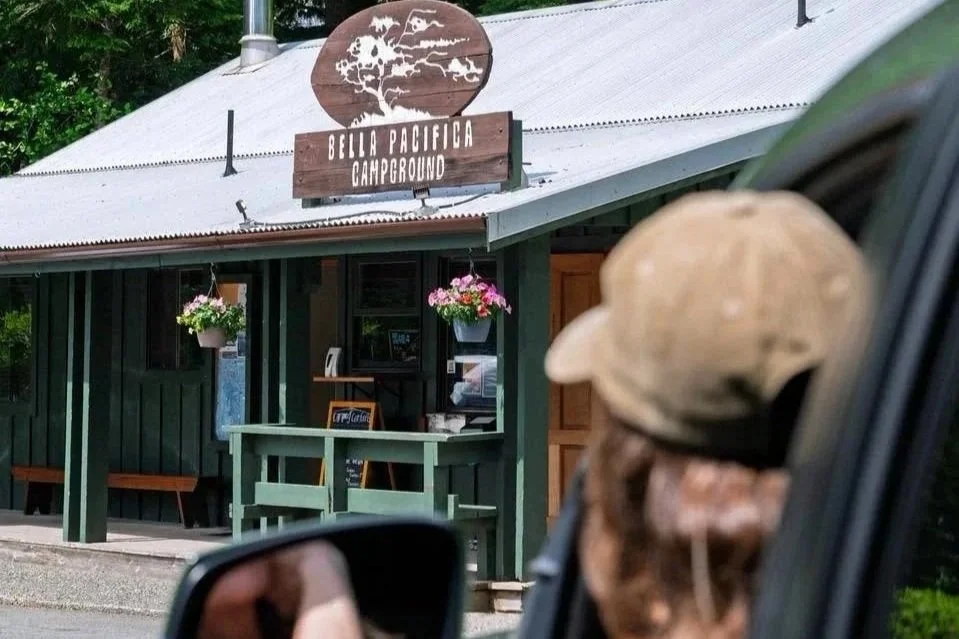
The good campsites book up. The beachside spots go fast. The popular places are popular for a reason, and by July and August, you can feel that demand everywhere. Green Point, Bella Pacifica, Surf Grove, Surf Junction, JX, the whole West Coast stretch gets attention from people who know exactly what they are looking for.
That does not mean you should avoid it.
It means you should not build the whole trip around crossing your fingers.
For Tofino and Ucluelet, I would treat camping the same way I treat an old van before a long drive. Check the important stuff first. Make sure the thing that matters most is handled. Then relax into the rest of the trip.
A reservation is not the enemy of adventure. It is what gives adventure room to breathe.
That might sound backwards, but it is true. When you know where you are sleeping at the end of the day, you do not have to rush through the day trying to solve the night. You can stop at Long Beach. You can take the long walk at Nuu Chah Nulth Trail. You can wander the Wild Pacific Trail in Ucluelet and not spend the whole afternoon refreshing booking pages from a patch of cell service.
The campsite is the anchor.
The trip is everything that happens before you get there.
Set the Anchors, Let the Middle Move
This is the part I think most people miss.
Peak season does not have to be fully planned from the first kilometer to the last. It just needs a few solid anchors.
If I were helping a friend plan a summer Westy trip to the West Coast, I would start with the obvious ones.
Book the first night. Book the last night. If Tofino or Ucluelet is the main event, book that too.
After that, leave some space.
Maybe your first night is somewhere calmer before you push west. Maybe your Tofino nights are locked in, but the days around them are open. Maybe your final night is somewhere easy, so the trip does not end in a scramble. The point is not to turn the whole thing into a spreadsheet. The point is to remove just enough pressure that you can actually enjoy the road.
That is where the Westfalia makes sense.
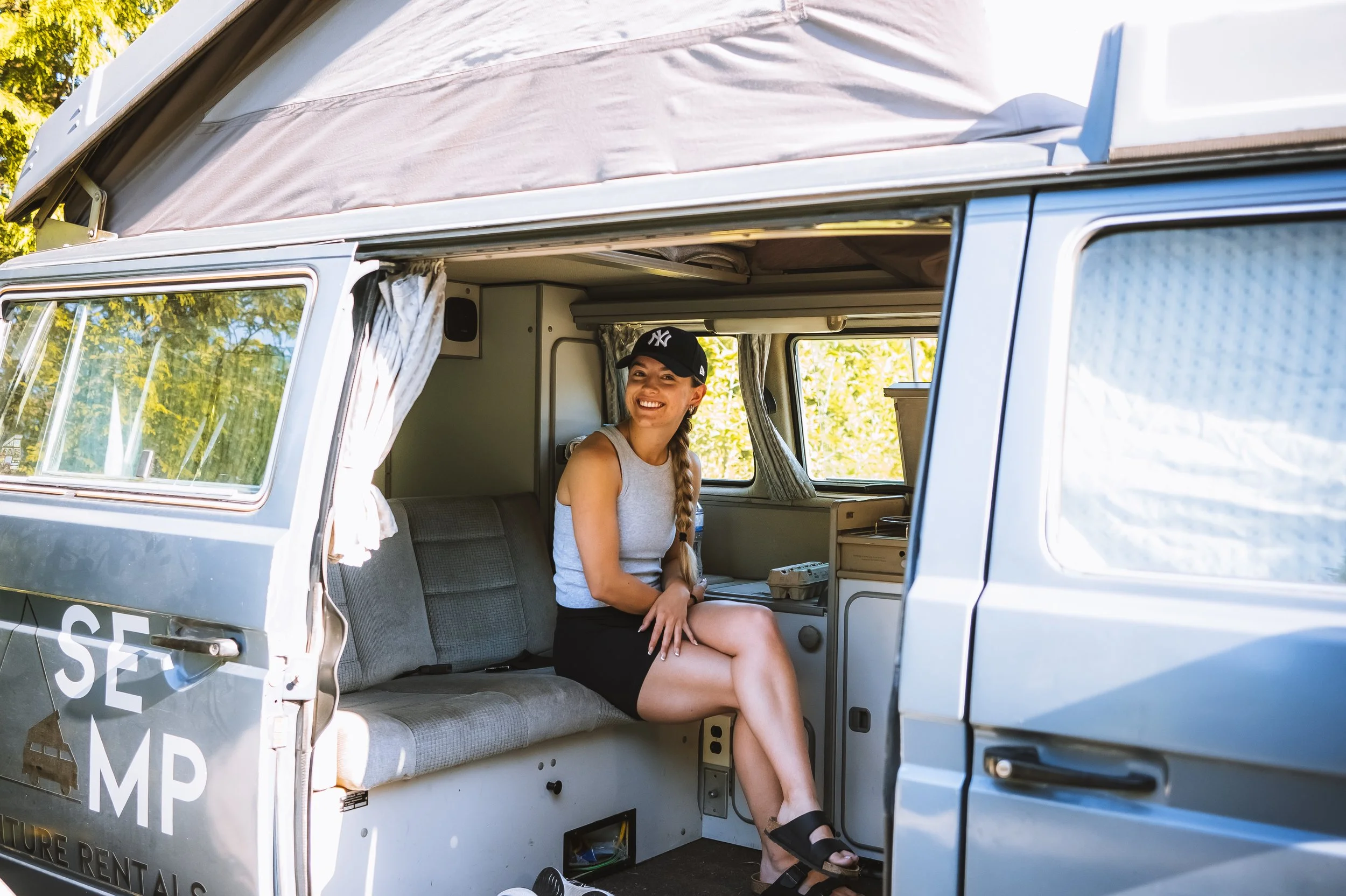
Your bed is already with you. Your kitchen is already packed. Your gear has a home. You are not unpacking and repacking every morning like your bags exploded in the back of a rental car. You can pull into a day-use area, make a simple lunch, dry off after a swim, change plans, and keep rolling.
The van does not magically create campsite availability.
But it does make you more flexible with the hours in between.
And in peak season, the hours in between are where a lot of the good stuff happens.
Tofino and Ucluelet Are One Big Chapter
Personally, I tend to think of Tofino and Ucluelet as part of the same Wet Coast chapter.
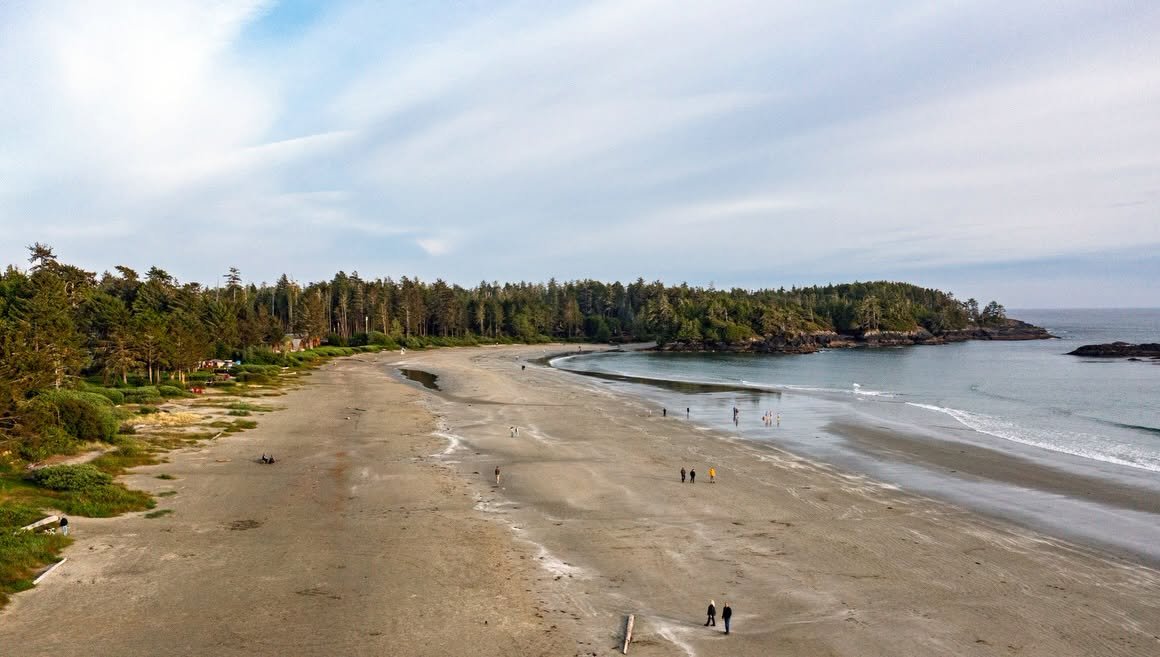
They have different personalities, but when you are travelling through them in a van, the beaches, trails, surf breaks, and campgrounds all start to stitch together into one experience. Cox Bay, Chesterman, Long Beach, MacKenzie Beach, the Wild Pacific Trail, the road between town and the junction. It all becomes part of the same rhythm.
Tofino has the buzz. The surf shops, restaurants, beach energy, and that feeling that everyone showed up for the same summer dream.
Ucluelet gives you a bit more room to exhale. The harbor feels more working-town. The Wild Pacific Trail has that edge-of-the-continent feeling without needing much explanation. You can walk through wind-bent trees, watch waves hit black rock, and feel like the day got quieter without leaving the Wet Coast.
That is why I would not frame Ucluelet as the backup plan.
It is part of the plan.
If Tofino is the lively part of peak season, Ucluelet is the part that helps balance it out.
You can enjoy both, as long as you stop expecting either one to feel empty in August.
When the Wet Coast Is Full
There will still be times when the Wet Coast is just full.
That is not a failure. That is peak season doing peak season things.
This is where having a few backup routes in your pocket helps. Not as a consolation prize, but as a way to keep the trip moving instead of forcing one plan to carry all the weight.
Our Spirit Loop Route is the south coast version of that reset. Sooke, Jordan River, Sombrio, Port Renfrew. It has surf, big trees, rougher edges, and less of that polished resort feeling. It is still busy in its own way, but it spreads people out differently. The beaches feel wilder. The road feels more like a road trip.
The North Island Getaway Route is for when you want more distance between yourself and the rush. Campbell River, Telegraph Cove, Port McNeill, Port Hardy. Bigger driving days, quieter towns, more room to feel like you actually went somewhere. It is not the same trip as Tofino, and that is the point.
Then there is the idea of a central Island lake route, which deserves its own proper planning. Cowichan Lake, Strathcona Provincial Park, Comox Lake, and the smaller stops in between can make for a great summer trip, but it needs to be curated properly. Some roads are logging roads. Some look better on a map than they feel behind the wheel. That is not a route I would throw together loosely for someone without checking the details.
Still, the idea matters.
If the Wet Coast is full, Vancouver Island is not finished.
Sometimes the better trip is the one that changes shape.
The Last-Minute Mindset
There is a difference between being spontaneous and being unprepared.
Spontaneous is leaving room in the day for a lake swim you did not plan on. It is pulling over for fish and chips because the sign looked good. It is taking the longer way because the weather changed and the coast is clearing up. It is making dinner at the van while everyone else is waiting for a table.
Unprepared is showing up in Tofino in August with no campsite, no backup, and a quiet hope that something will magically appear.
I like flexibility. I like the part of the day where the plan bends a little.
But I do not want the place I sleep to be a gamble, especially in August.
Peak season asks for a smarter kind of spontaneity. The kind where the anchor is set, but the road between here and there still has room to move.
Book the anchors. Let the day stay loose.
That is the balance.
Because camping is not really the goal. Adventure is.
The campsite is where you land at the end of the day. It matters, especially in peak season, but it does not have to be the whole story. Some of the best moments happen nowhere near the destination: bare feet in the sand after a surf, a damp towel hanging over the mirror, a simple lunch made out the side door, a trail you only walked because you had time to spare.
When you know where you are sleeping, you can stop chasing the plan. So enjoy the days!
How I’d Actually Do Peak Season
If a friend asked me how to enjoy Tofino and Ucluelet in peak season without getting swallowed by the chaos, this is what I would tell them.
Book your first and last night.
Those two anchors take a lot of pressure off. The first night lets you settle in without scrambling. The last night helps the trip end cleanly instead of turning into a tired search for somewhere to sleep.
Book the Wet Coast chapter early.
If Tofino or Ucluelet is the main reason for the trip, do not leave that part to luck. Get the campsite sorted first, then build the rest of the route around it.
Arrive early to the busy places.
Beaches, trailheads, groceries, Tacofino, all of it feels better before the middle of the day. Peak season rewards the people who get moving before everyone else has finished packing the cooler.
Keep meals simple.
You do not need to eat out every night to enjoy the Wet Coast. A good camp meal at the van can save you from lineups, parking stress, and that hungry late-afternoon mood where every small problem feels bigger than it is.
Use Tofino as one chapter, not the whole book.
Go for the buzz. Enjoy the surf-town energy. Let it be lively. Then give yourself permission to roll somewhere quieter before or after. Ucluelet, the south coast, the North Island, the lakes, there is more than one way to have a summer trip here.
A Westy Built for Flexible Plans
A Westy is not a loophole around peak season.
It is not a magic ticket to a beachfront campsite.
What it does give you is freedom inside the structure.
If you have a few reserved camping spots, you can still be spontaneous. You can take the slow way. You can stop when the weather clears. You can spend the day exploring without that little voice in the back of your head asking where you are going to sleep.
Not “forget planning.”
More like: plan just enough that the good stuff has room to happen.
That is how I think peak season works best on Vancouver Island. A few anchors. A loose map. A van that is already packed with what you need. And enough patience to enjoy the fact that, yes, everyone else wanted to be here too.
If peak season is calling your name, start with a couple of good campsite anchors. We’ll help you build the Westy trip around the space in between.